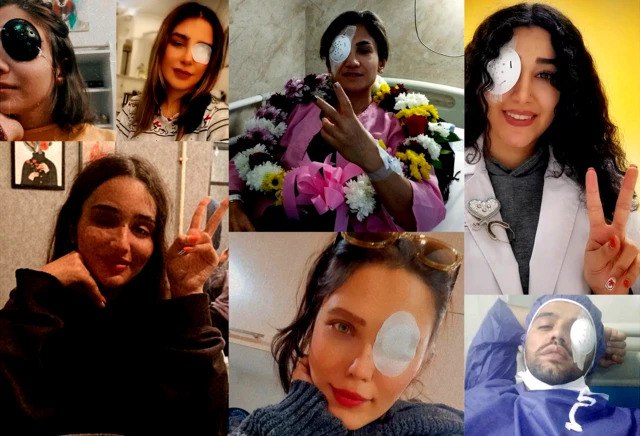
A group of Iranian ophthalmologists, in an open letter addressed to the heads of the three branches of government and to military, security, and judicial authorities, have expressed grave concern over the rising number of severe eye injuries and permanent blindness resulting from the crackdown on the nationwide uprising, and have called for an immediate halt to the use of pellet-firing weapons.
In the statement, the signatories point to a sharp increase in patients presenting with serious eye injuries, noting that a significant portion of these injuries are the result of the widespread use of pellet guns during the suppression of protests.
The letter states:
“As physicians who witness the suffering of these victims and their families every day, we state clearly: blinding human beings—even in situations of unrest and protest—is not a means of control, but a clear example of oppression, a violation of human dignity, and a criminal and inhumane act.”
The signatories further emphasize that “the use of pellet-firing weapons in a manner that results in targeting the faces and eyes of citizens is medically and ethically completely unacceptable and extremely dangerous.”
Another section of the statement stresses:
“Blinding people, under any pretext and in any circumstances, is neither religiously, nor legally, nor ethically justifiable.”
The ophthalmologists also warn that these actions are not limited to physical harm, stating that “in addition to causing irreversible physical and psychological damage to victims, they leave deep and lasting social wounds on the body of society.”
The statement goes on to outline several specific demands addressed to state officials, including:“An immediate order to stop the use of pellet guns and any similar weapons in dealing with public gatherings.”
The signatories also call for “independent, transparent, and accountable investigations into the numerous cases of blindness,” and stress that “those who ordered and carried out these actions must face fair judicial proceedings in accordance with the law.”
In conclusion, the statement underscores the need to support victims, stating:
“A clear mechanism must be established to compensate victims for material and moral damages, and to provide medical, rehabilitative, and social support.”
Previously, The Guardian reported—citing an ophthalmologist in Tehran—that more than 400 cases of eye injuries caused by gunfire were recorded in a single hospital, as medical staff struggled under intense pressure from the growing influx of wounded protesters following the violent suppression of nationwide demonstrations by Iranian authorities.
According to The Guardian, three doctors, in messages sent to the newspaper, described severe overcrowding in hospitals and emergency wards filled with protesters injured by gunfire. Medical staff reported that most gunshot wounds were concentrated in the eyes and heads of protesters.
Earlier, Time magazine reported—citing two senior officials at Iran’s Ministry of Health and hospital data—that during January 8 and 9, more than 30,000 people may have been killed across Iran within just two days.