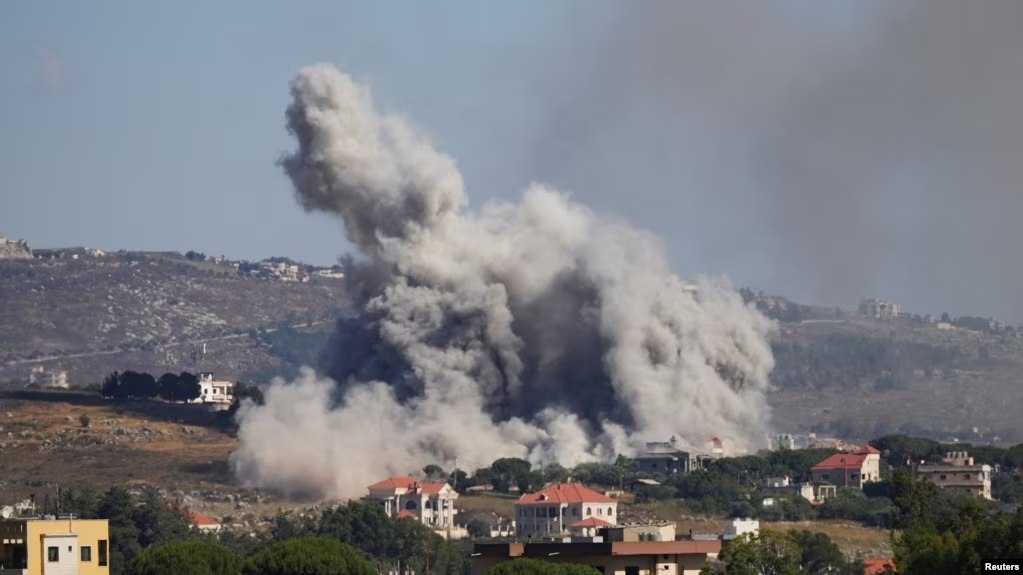
Axios reported on Friday, June 19, citing two U.S. officials, that Israel and Hezbollah had agreed, through mediation by Qatar and the United States, to implement a ceasefire beginning at 4:00 p.m. local time.
Despite the agreement, however, fighting between Israel and Hezbollah intensified on Friday compared to previous days. Hezbollah continued launching rockets and drones toward Israeli forces, while Israeli fighter jets carried out extensive airstrikes across southern and eastern Lebanon.
In this context, Israel's Channel 13 reported: "We are now in a ceasefire situation, and if Hezbollah does not attack us, the Israeli military will act accordingly."
Contrary to the expectations of the Islamic Republic and Hezbollah, the end of the fighting did not result in an Israeli withdrawal from southern Lebanon. Israeli officials stated that the areas captured in southern Lebanon would be retained as a security zone.
Meanwhile, the Lebanese government continues its direct negotiations with Israel and hopes that, through the establishment and expansion of security zones in southern Lebanon, Hezbollah will surrender its weapons and Israeli forces will subsequently withdraw from those security areas.
On Thursday, June 18, U.S. President Donald Trump wrote on Truth Social: "The United States is committed to peace, and we encourage everyone in the Middle East to honor their commitment to advancing our negotiations in the best possible way."
On the evening of Wednesday, June 17, President Donald Trump announced that he had signed the memorandum of understanding with the Islamic Republic at the Palace of Versailles.