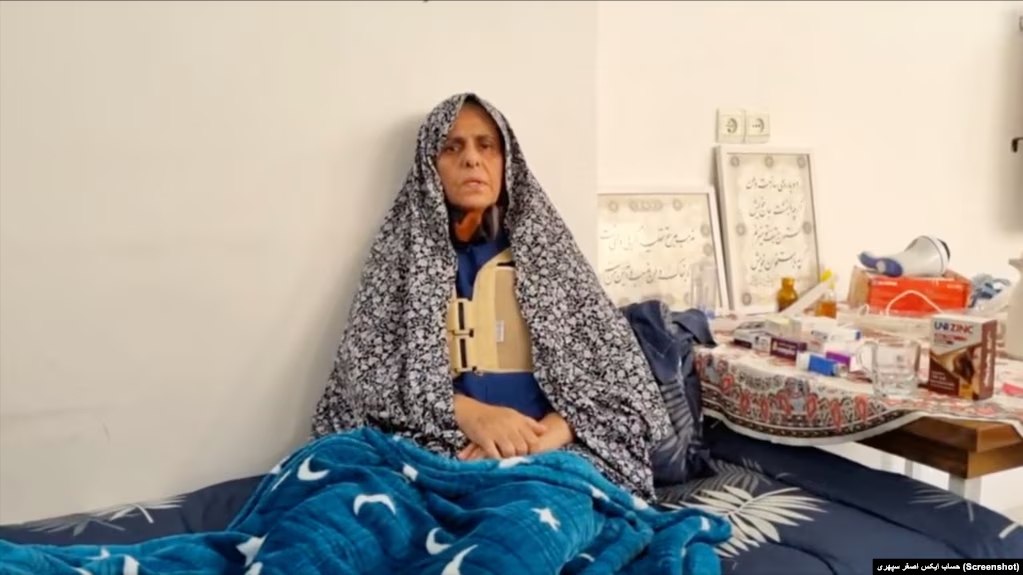
The family of Fatemeh Sepehri, a political prisoner held in Vakilabad Prison in Mashhad, has warned that her medical treatment has been suspended despite her heart condition, saying that continued denial of specialized medical care could seriously endanger her health.
According to a report published by the Human Rights Activists News Agency (HRANA) on July 8, Asghar Sepehri, the prisoner's brother, said that although doctors had recommended a follow-up examination by a cardiologist, the visit has not taken place. He also stated that most of Fatemeh Sepehri's essential medications have run out. According to him, the continuation of her treatment depends on an examination by a heart specialist and the renewal of her prescriptions.
Fatemeh Sepehri has been sentenced to multiple prison terms in recent years in several politically related cases. She was among the signatories of a public letter calling for the resignation of former Supreme Leader Ali Khamenei and is currently serving her sentence in Vakilabad Prison in Mashhad.
In recent months, amid increasing security pressure in Iran, numerous reports have documented an intensified crackdown on political prisoners and civil activists. Human rights organizations have expressed concern over rising numbers of arrests, harsh prison sentences, prolonged solitary confinement, denial of access to legal counsel, pressure on prisoners' families, and the growing risk of death sentences and executions against political prisoners.
They have also repeatedly criticized the denial of prisoners' right to medical care, including restrictions on access to specialist treatment, transfers to medical facilities, and the provision of essential medications, describing such practices as a means of exerting additional pressure on detainees.
Human rights organizations maintain that these measures may violate the rights to a fair trial, healthcare, and other fundamental human rights, and they have called on the international community to monitor the situation of political prisoners in Iran more closely.