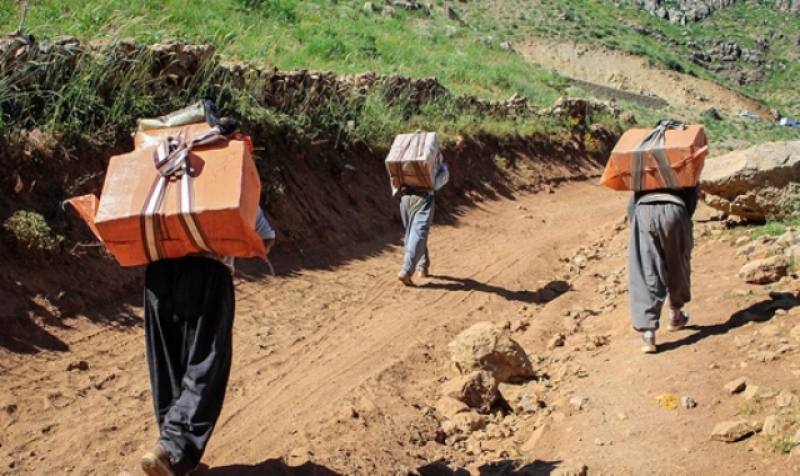
According to investigative data published by the Avatoday research unit, at least 2,574 kolbars (cross-border porters) in the Kurdish provinces of Iran, including Urmia, Sanandaj, and Kermanshah, have been killed or injured between 2012 and October 2025. Out of this number, 656 kolbars lost their lives, and 1,918 were injured.
These statistics indicate that since the early 2010s, the number of kolbar casualties has steadily increased, reaching its highest peak between 2017 and 2024.
This data reveals the depth of the humanitarian crisis of kolbari, a phenomenon that—instead of declining—has intensified every year due to structural poverty, widespread unemployment, and heavy state repression in Kurdish regions.
For years, the Kurdish provinces of Iran have been systematically excluded from national development. Reports on regional development and data from institutions such as the Research Center of the Iranian Parliament show that these areas are plagued by high unemployment rates, lack of industrial infrastructure, absence of public investment, and institutionalized discrimination.
Experts argue that the securitization of Kurdish regions has led the state to prioritize political and cultural repression over economic development and job creation.
Human rights organizations have repeatedly stated that national minorities such as Kurds face restrictions on their mother tongue, political participation, and access to economic resources, creating a cycle of poverty, forced migration, kolbari, and social unrest.
Analysts believe that the deliberate exclusion of these regions from national development plans and budget allocation, along with the labeling of civil demands as security threats, are among the main reasons for the persistent underdevelopment and poverty in Kurdish-populated provinces.