Ali Khamenei, the dictator ruling Iran, had once declared: “There will be neither war nor negotiations.” Yet contrary to his claims, both war did break out and, on August 26, 2025 (Shahrivar 4, 1394 [Iranian calendar in your text]), Iran went to the negotiating table in Geneva to begin the second round of talks with the European powers.
In stark contrast to Khamenei’s assertions, on June 13 (Khordad 23), the Israeli army launched a sudden, crushing, lightning strike: it killed top and senior commanders of Iran’s terrorist Islamic Revolutionary Guard Corps (IRGC), completely destroyed Iran’s air defense system, pounded its air bases, eliminated key figures involved in Tehran’s nuclear-terrorist projects, and blew up one ballistic missile depot after another.
According to the admission of officials of the Islamic Republic, 38 senior commanders were killed in just the first days of the war, and nearly 800 IRGC military-terrorist forces were killed as well. Unfortunately, civilians also lost their lives in these strikes. On the other hand, according to Israel’s Channel 12, during Iran’s missile attacks on Israel, only 28 people were killed—of whom only one was a soldier.
Since the people of Iran have lived for nearly five decades in a hell manufactured by the Islamic Republic, and as many of their loved ones have been executed or assassinated by IRGC terrorists, these attacks sparked a widespread wave of joy among different strata of society. Certainly, no one supports or encourages war, but for a nation long-suffering and essentially trapped in an unrelenting war with the Islamic Republic for almost fifty years, the targeting of the regime’s military-terrorist centers was seen as a blessing and an unbelievable development.
From the people’s perspective, the killing of nearly 800 IRGC, army, police, and Basij operatives, who had played the main role in massacring the children of this land, was the realization of justice that should have come much sooner. This historic event and the heavy blow delivered to Iran’s terrorist regime reshaped the country’s entire domestic and foreign equations.
In this context, and to shed more light on Iran’s current situation and that of the region, I held an exclusive interview with Dr. Reza Parchizadeh, political theorist and security affairs expert. In this interview I asked Dr. Parchizadeh about Iran’s political atmosphere after the twelve-day war, and whether the Islamic Republic had managed to use the war to reinforce its legitimacy or whether it had been further weakened. He replied:
“The war had two distinct dimensions. On the one hand, it exposed the Islamic Republic’s severe military and security weaknesses, significantly undermining its position both domestically and on the regional and international stage. It became abundantly clear that the regime’s claims about “guaranteeing Iran’s security” or its supposed “capacity to annihilate Israel” lacked any real substance. This not only deepened the erosion of public trust in the regime’s effectiveness but also reshaped how regional actors and global powers viewed Iran’s actual capabilities, leading to a marked decline in its geopolitical standing.
On the other hand, Israel’s broad attacks on Iranian territory—including, in some cases, civilian and non-strategic sites—gave the regime an opportunity to revive the painful memories of the Iran-Iraq War and rekindle a climate of fear and wartime anxiety within society. This allowed the regime to temporarily draw closer some of its domestic opponents who opposed Israel’s aggressive posture and to exploit anti-war sentiment for its own survival. In this sense, Israel’s offensive created a contradictory outcome: while it seriously undermined the regime’s legitimacy, it also enabled the regime to partially shore up its social base in the midst of crisis. Ultimately, this confrontation acted as a double-edged sword for the Islamic Republic”.
I asked Dr. Parchizadeh for his opinion on the impact of this war on the foreign policy decision-making of the Islamic Republic, to which he added:
“The Islamic Republic has now firmly concluded that Israeli Prime Minister Benjamin Netanyahu’s ultimate objective is the regime’s complete overthrow. Meanwhile, Donald Trump and his administration—as well as certain Western governments—either tacitly support this agenda or lack the capacity to restrain it. This perception has led Iran’s leadership to frame its position as standing on the brink of an “apocalyptic war.” In this context, senior officials and military commanders regularly threaten Israel and the United States, warning that any hostile action would be met with a “crushing response.”
Regionally, Tehran’s proxies in countries such as Lebanon and Iraq are under growing pressure from local governments to disarm, yet they fiercely resist and present themselves as integral parts of this confrontation. At the same time, reports have emerged indicating that China has been transferring advanced missile and military technology to Iran, a development that could further complicate the balance of power. Taken together, these dynamics suggest that more than ever before, the Islamic Republic is shaping its foreign policy around the premise of “preparing for a major war,” and its regional and international decisions increasingly reflect this war-centered outlook”.
He also spoke about Iran’s position in the region after the twelve-day war, saying:
“There is little doubt that the war reduced Iran’s regional influence. Since the mid-2000s—after the fall of Saddam Hussein in Iraq, the expansion of Tehran’s role in Syria, and the strengthening of Hezbollah in Lebanon—the Islamic Republic had succeeded in projecting itself as the Middle East’s dominant power. But the Twelve-Day War, which came in the wake of Israel’s response to Hamas’s October 7, 2023 terrorist attack, dealt a serious blow to Tehran’s position and disrupted the region’s geopolitical balance.
That said, there was another dimension. Fear of Israel’s growing influence and the possibility of its emergence as the new regional hegemon has led some states—including Arab nations, Turkey, and even Pakistan—to move tactically closer to Tehran, despite their criticisms of the Islamic Republic’s policies. Their shared concern is that if Israel consolidates a hegemonic position, its aggressive posture and expansionist agenda could eventually target them as well. Thus, while the war clearly weakened Iran’s status as the region’s hegemon, it also encouraged temporary alignments with some neighbors, adding a layer of complexity to the regional equation”.
In the continuation of the interview, I asked about the future developments in the region: given the experience of this war, is the likelihood of similar conflicts in the future serious? If so, what consequences would this prospect have for the Islamic Republic and for Iran? To this he added:
“The likelihood of renewed conflicts is very high. Israel is openly seeking to redraw the region’s geopolitical map under its vision of a “New Middle East,” and it enjoys the support of the global right-wing movement in pursuing this objective. Meanwhile, Russia—bogged down in the war in Ukraine—has been compelled to grant concessions to the United States and Israel, leaving the Islamic Republic with fewer options both regionally and domestically. More broadly, the international climate is shifting away from diplomacy and toward military confrontation as the preferred method for addressing longstanding geopolitical and ideological disputes.
Against this backdrop, the Islamic Republic is more vulnerable than ever. Tehran’s loss of legitimacy and its military-security weaknesses have led Israel and its allies to conclude that now is the optimal moment to press for regime change in Iran, and efforts in that direction are ongoing. Furthermore, scenarios involving the fragmentation of the country have entered serious discussions in certain circles. In sum, if current trends persist, Iran faces a perilous future: it is not only the survival of the regime, but also the country’s territorial integrity and very existence that is at stake”.
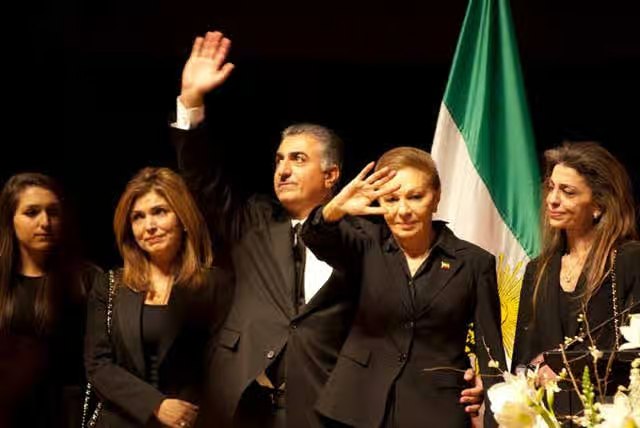
Nevertheless, foreign developments have also had a direct impact on the policies and activities of the Iranian opposition. During the days of the war and in its aftermath, the monarchist faction, led by Reza Pahlavi, expanded its activities both in the real and virtual arenas. I asked Dr. Reza Parchizadeh: some believe that in recent years this monarchist faction, through its actions and positions, has caused division within the opposition to the Islamic Republic. Even former U.S. Secretary of State Mike Pompeo has spoken of this group’s collaboration with the IRGC. How do you assess the role of this faction? To this, Dr. Parchizadeh recalled:
“That assessment is correct. I was among the first analysts to raise this issue years ago, at a time when the extent of sabotage and infighting within the opposition had not yet escalated to its current levels. Mike Pompeo highlighted this in 2023 during a conference hosted by the monarchists’ rival group, the Islamist-Marxist Mojahedin-e Khalq, pointing to the monarchists’ collaboration with the regime. But I had already been warning about this since at least 2017, presenting undeniable evidence.
The monarchist movement—which is far from unified and plagued by internal rivalries—has in recent years become one of the most destructive forces in the Iranian opposition. On one hand, it has tried to revive a centralized, authoritarian system; on the other, it has acted repressively toward rival political currents and even ordinary citizens who do not support it. In doing so, the monarchists have been the single greatest obstacle to the emergence of a credible democratic alternative to the Islamic Republic. Their actions have not only deepened division within the opposition but have, in effect, contributed directly to the regime’s longevity”.
At the end of the interview, I pointed out that, given the experience of the opposition, how can one overcome the destructive role of the monarchists in creating division and move toward genuine unity for a transition beyond the Islamic Republic? To this, Dr. Parchizadeh added:
The problem is not confined to the monarchists, though they have undoubtedly been the most significant source of division within the Iranian opposition. Other groups have also played a highly disruptive role. For instance, separatist movements seeking to fragment Iran by force have promoted artificial and dangerous distinctions among citizens, fueling ethnic hostilities to advance their agenda. These groups often welcome foreign intervention and spread the notion that the fall of the Islamic Republic would inevitably lead to civil war and the Balkanization of Iran. Even if their share of the blame is not equal to that of the monarchists, they have still contributed substantially to blocking the path toward unity.
Moving toward genuine unity requires that all opposition forces commit to a shared democratic framework. In such a framework, all citizens—regardless of political orientation, ethnicity, or religion—would enjoy equal political and civil rights. Just as importantly, Iran’s territorial integrity must be upheld in line with international law, ensuring that no faction can impose separatist agendas that would plunge the country into perpetual chaos. Only within this framework can the prospect of a peaceful and sustainable democratic transition become feasible. Such an agreement would serve both as a litmus test of the opposition’s seriousness and as the foundation for building mutual trust and real convergence among anti-regime forces”.